In my world wide web exploration, I just learned today how to read and interpret a fen standard or notation.
FEN stands for Forsyth-Edwards Notation. It is used to describe the particular position in a chess game. As compared against a PGN (Portable Game notation) file, a FEN describes the position at that particular point in time, while PGN describes how the game went on from the first move to the last. It’s weird that I was able to relate this two types of chess files to accounting and financial reporting. FEN is like the balance sheet, which presents the financial condition of an entity at a certain point in time. While, on the other hand, PGN is like the income statement, which presents how the operation went during a period of time.

Usually, when using chess applications, the program has the ability to save fen files as well as read and show automatically what is described in the fen file. However, what if you have no chess program to analyze this series of codes? How do you set up the position in say an actual chessboard to analyze that particular position?
One might wonder, why do you still need a fen file when you can have a position illustrated by an image (i.e., jpg, gif, bmp, tif, png, etc. type of files)?
- You cannot import the image file into your chess program and play through the game to analyze the position
- An image alone lacked a lot of data
To illustrate, take a look at the diagram below:

In this illustration, what do you miss?
Answer:
- Active Color – which color is to move next
- Castling Availability – Is queenside or kingside castling (in-rook) still available to either black or white?
- En Passant Target Square – Can white/black make an en passant capture? In this specific example, how can you determine whether white can capture en passant at the pawn at d6?
This is where FEN comes into the picture. The following notation depicts the same position as above, with additional useful information to analyze the position:
r2qk2r/pp2ppp1/1n4n1/2ppP1Bp/1b1P2b1/P1N2N2/1PP1BPPP/R1Q1K2R w KQkq – 0 8
This notation is composed of six data fields. The first being:
r2qk2r/pp2ppp1/1n4n1/2ppP1Bp/1b1P2b1/P1N2N2/1PP1BPPP/R1Q1K2R
…which is the piece placement data. It corresponds directly to the board coordinates starting from the eighth rank, from left to right. The small letters represent black, while the capital ones are white (where q-queen, k-king, b-bishop, r-rook, n-knight, p-pawn). The numbers represent the number of blank squares between last and next pieces described.
The second field, “w”, describes the active color and tells that white is to move next.
Castling availability is the third field. “KQkq” enjoins that both colors can still castle queenside or kingside. Of course, without this field, how would you know if the white or black king or the rooks have already moved and back to prohibit castling on that side? Note that this pertains to the “potential” future castling availabilitty, regardless of if there are any other pieces that block the rook and king at the moment. Capital letters represent white, and small letters black. K/k=kingside, Q/q=queenside. Other possible combinations include: Kkq, Kq, kq, etc. White always precede black, and the kingside always precede the queenside. If there are no castling available a “-” is used.
The fourth field (“-” in this case)is the en passant target square. It is only given if the last move was a pawn advance of two squares. Otherwise, “-” is again used. If given, it should represent the coordinates of the square at which the active player can capture via en passant. Obviously, it should be one of the squares in the 3rd and 6th rank. Examples include: e3, e6, d3, f6, etc.
The fifth field (0 in this example) is the halfmove clock. It is the measure of the number of halfmoves since the last pawn advance or capturing move. This value is used for the fifty move draw rule.
The sixth and the last field (8 in this case) is the fullmove number. It is measured by adding 1 to the nth move by black.
So, in conclusion, it’s not always true that a picture paints a thousand words.

 No album had such an overpowering impact on me – I was 13 year old kid who was not interested at music at all when all of a sudden I turned to rock. A few months later, I bought a guitar and started playing. The song “Come as you are” was the first song I learned to play. I also played the song “Lithuim” at an office Christmas party in 2001 – I think I did a good job in impersonating Kurt Cobain. Cobain is a gifted song writer. The 12 songs, which are catchy, melodic and powerful, are stuck in my head like peanut butter in the brain. This album changed my life and millions of other lives.
 Dirt is AIC’s masterpiece. It is the ultimate drug album of the 90’s. Songs like “Junkhead”, “Sickman”, “Godsmack”, “Angry Chair”, “Hate to Feel” and the title track “Dirt” are about Layne Staley’s drug addiction. Staley died due to drug overdose in 2002. Staley’s vocal gives the album its dark and gloomy feel while Jerry Cantrell’s grinding riffs will make you feel like dirt. This album also includes the hits “Rooster”, “Down in a Hole” and “Would”. I always sing along to all 13 tracks of this album every time it’s playing and yes, including the 43 second song “Iron Gland”.
 Ten is Pearl Jam’s debut album. The album’s name is based on the jersey number of NBA player Mookie Blaylock, which was also Pearl Jam’s name before Mookie told the band to stop using his name. It’s really hard for me to pick what PJ album to include in my top 10 because I love all 8 studio albums. If it wasn’t for Nevermind and Dirt, this would’ve been number 1. Ten is Pearl Jam’s most commercially successful album selling 15 million copies worldwide and producing the songs “Jeremy”, “Alive” and “Even Flow”.
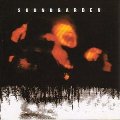 Soundgarden has the heaviest sound among the Seattle bands. This album sounds lighter than the previous albums – “Louder Than Love” and “Badmotorfinger”. Although I prefer the old heavy Soundgarden sound, this album is their finest work. It sounds like the old Soundgarden with a touch of the Beatles. One of my favorite songs, “Fell on Black Days”, is in this album. Most of the songs here have alternate tunings (on guitar/bass) so they are pretty hard to play. Singing along with Chris Cornell can cut a nerve in your neck. Listen to Superunknown and you’ll find out what I mean.
 Temple of the Dog is collaboration between Soundgarden members Chris Cornell and Matt Cameron and Pearl Jam members Stone Gossard, Jeff Ament and Mike McCready. The album is a tribute to Andrew Wood, lead singer of Mother Love Bone, roommate of Chris Cornell and former bandmate of Gossard and Ament. Eddie Vedder appeared in the song “Hunger Strike”. The duet between Cornell and Vedder is classic. The album also featured Mike McCready’s first guitar solo on the song “Reach Down”. I didn’t know the album existed until I discovered Pearl Jam and Soundgarden. Finding it was like finding a gem.
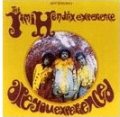 Jimi Hendrix is the greatest guitarist ever. No doubt about it. He is number 1 in Rolling Stones Magazine’s greatest guitarist of all time list. I bought a white fender Stratocaster because of him (but I can’t play like him). My uncle introduced me to Hendrix when he found out that I was playing guitar. “Are You Experienced?” was Jimi’s first album and featured his excellent and superb guitar playing skills. This album has 3 versions, I have the US CD version which I think is the best. From “Purple Haze” to “Red House”, every song is worth it.
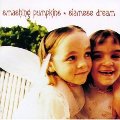 My mother bought me this record in 1994 as a birthday gift. The Pumpkins pushed further from Nineties alt-rock to a grander, orchestrated sound with multiple guitar parts, strings and a Mellotron. Loved the guitar parts. It’s the main reason I bought a Digitech Whammy pedal (the guitar effect that was used on most of the guitar solos on this record).
 I have U2’s 2 Greatest Hits album and owned only 1 studio album & this one. I got this record the same time I got Nirvana’s Nevermind. I don’t really know why I like this album. After listening to it for a number of times, it just grew in me. This disc is packed with hits “Even Better than the Real Thing”, “One”, “The Fly” and “Mysterious Ways”.
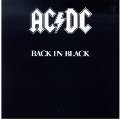 AC/DC’s first album with singer Brian Johnson after Bon Scott died. It’s strange that they sound the same. Back in Black features a great rhythm section from Malcolm Young and killer lead guitars from Angus Young. Most AC/DC albums have only 1 or 2 hits in them, this album generated AC/DC’s most popular songs “You Shook Me All Night Long”, “Back in Black”, “Shoot to Thrill”, “Hells Bells” and “Rock and Roll Ain’t Noise Polution”. A little trivia: The title track “Back in Black” is the first song Kurt Cobain learned to play on guitar.
 Also known as the “Black” album, this opened the doors to other Metallica albums and heavy metal music. I’m not too much of a heavy metal guy, the only metal bands I like are Metallica, Pantera and Megadeth. Listening to the black album makes me bang my head naturally.

 When we were new in Qatar, we were scouting for a bank that can accomodate our banking needs especially for payroll account purposes. A legion of the banks here offer high levels of average maintaining balance, until we found out about the service by Hongkong and Shanghai Banking Corporation (HSBC). HSBC offered no (zero/nil) maintaining balance for employees of pre-determined employers, and our employer was one of them. So we grabbed that opportunity and eventually learned about its lousy service.
 (Photo courtesy of